How to Choose a Battery for a Cordless Leaf Blower
Choosing the right battery for a cordless leaf blower starts with compatibility. Match the blower’s required battery platform and voltage first, then choose a capacity that fits the expected workload. Amp-hours affect potential runtime, but a larger battery also adds weight. Physical fit, electrical requirements, and charger compatibility matter just as much as the numbers on the label.
For most buyers, the best choice is not the battery with the highest voltage or Ah rating. It is the battery that fits the blower correctly and provides enough usable energy without making the tool unnecessarily heavy.

Start With Your Leaf Blower’s Battery Platform
A battery platform is the combination of voltage, physical interface, electrical contacts, charging requirements, and other design features that allow a battery to work with a specific family of cordless equipment.
Identify the platform before comparing battery capacity.
Start with the information already available on the blower and its original battery:
- Leaf blower brand and exact model
- Original battery model or reference number
- Nominal battery voltage
- Battery interface and mounting style
- Charger model
If you still have the original battery, check its label. The blower nameplate and user manual can also provide the required voltage and compatible battery references. For a broader replacement process, see this guide on how to choose the right replacement power tool battery.
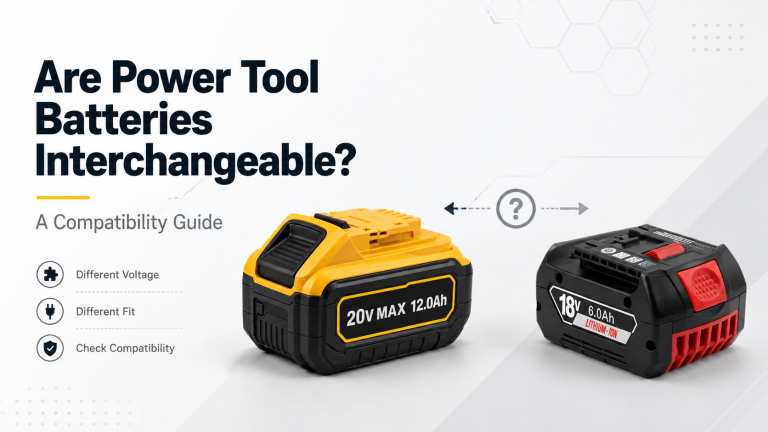
Do not assume that two batteries are interchangeable because both are marked 20V or 40V. Batteries with similar voltage ratings can use different housings, terminals, electronics, or charging systems.
The correct battery platform narrows the choice first. Capacity comes later.
Match the Battery Voltage to the Blower
Voltage, measured in volts (V), describes the electrical potential of the battery system. For a replacement leaf blower battery, voltage is primarily a compatibility requirement.
Use the voltage platform specified for the blower. If you need a deeper explanation of why nominal voltage and tool platform must be checked together, see how to match battery voltage with a cordless tool platform.
A higher-voltage battery should not be treated as an upgrade for a lower-voltage blower. A blower designed around a 20V platform should use batteries approved or verified for that platform rather than a 40V or 60V pack.
Different cordless outdoor-equipment categories commonly use different voltage ranges:
| Battery platform | Typical application |
|---|---|
| 18V–20V | Patios, driveways, small yards, light cleanup |
| 36V–40V | General residential yard work and moderate leaf cleanup |
| 56V–80V | Larger properties, heavier debris, wet leaves, and higher-demand equipment |
18V–20V Battery Platforms
These platforms are common in lighter cordless equipment. They can work well for short cleanup sessions, hard surfaces, and smaller residential areas where low tool weight is important.
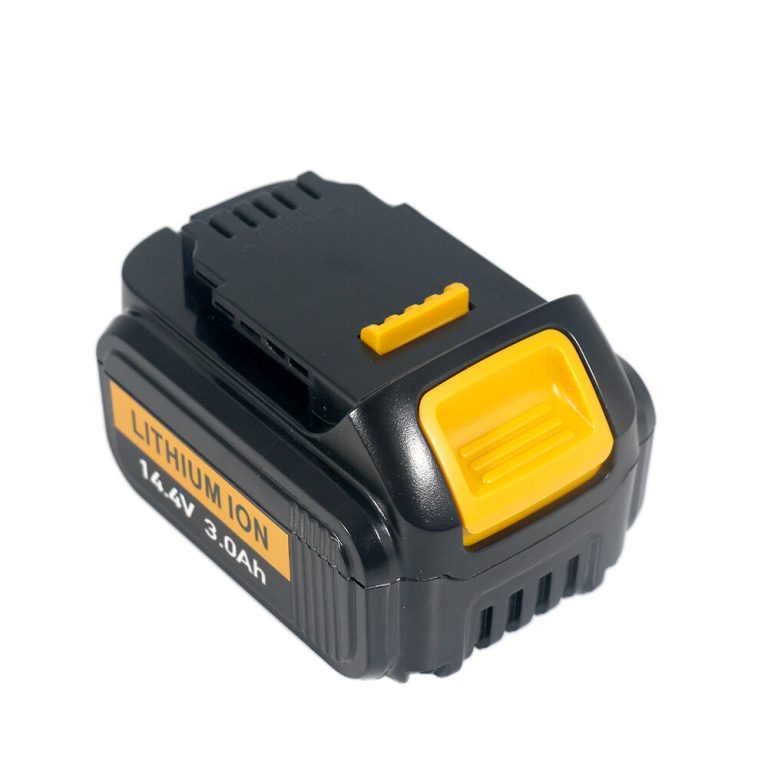
Some cordless systems also offer several capacity choices within the same nominal platform. For example, an 18V 3Ah–6Ah replacement battery for Makita LXT cordless tools shows how one platform may support several capacity options rather than requiring a different voltage for longer runtime.
36V–40V Battery Platforms
This range is often used for general residential outdoor equipment. It provides a practical platform for users dealing with larger yards or more regular seasonal cleanup.
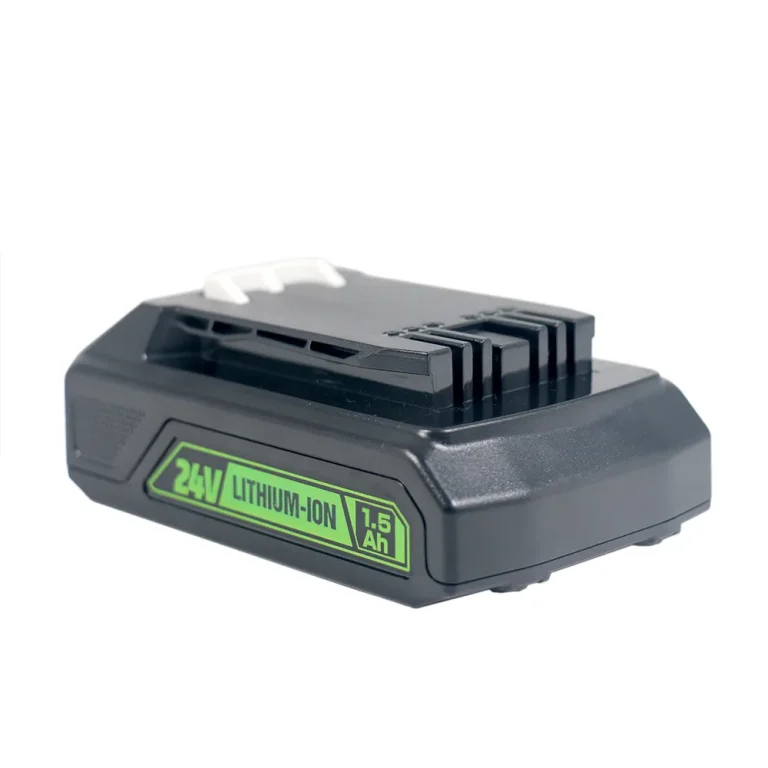
For buyers working within compatible Greenworks platforms, Greenworks compatible batteries provide a useful example of why platform identification matters before choosing capacity.
56V–80V Battery Platforms
Higher-voltage systems are common in equipment designed for greater power demand and longer or heavier work. They are often seen in large-property and professional-oriented cordless products.
Higher system voltage can support greater power demand, but voltage alone does not determine a blower’s CFM, MPH, or real-world performance. Motor design, electronics, fan design, and overall system efficiency also matter.
For a battery replacement, the rule is simple: match the blower’s required voltage rather than choosing voltage based on the performance you want.
Choose the Right Ah Capacity for Your Runtime Needs
Amp-hours (Ah) describe a battery’s rated charge capacity. Within the same compatible battery platform, a higher Ah rating generally means more available capacity and longer potential runtime.
It also usually means a larger and heavier battery pack. If you want a more detailed explanation of this relationship, see how battery Ah affects runtime.
What Does Ah Mean on a Leaf Blower Battery?
A simple way to think about Ah is to compare batteries on the same platform:
| Battery capacity | Typical consideration |
|---|---|
| 2.0–3.0Ah | Lighter battery, short cleanup jobs |
| 4.0–5.0Ah | Practical balance between runtime and weight for many residential users |
| 6.0Ah+ | Longer work sessions, with more battery weight |
A small 2Ah or 3Ah battery may be enough for clearing a patio, driveway, or small area. For routine yard cleanup, 4Ah to 5Ah is often a useful middle range. Larger 6Ah or higher-capacity packs make more sense when runtime matters more than minimum tool weight.
That does not make 4Ah or 5Ah universally “best.” The correct capacity depends on the blower, the job, and how long you expect to hold the tool.
Why Watt-Hours Matter Too
Ah should not be used by itself when comparing batteries from different voltage platforms.
Watt-hours (Wh) measure nominal stored energy and are calculated as:
Wh = Nominal Voltage × Ah
For example:
| Battery | Nominal energy |
|---|---|
| 20V 5Ah | About 100Wh |
| 40V 5Ah | About 200Wh |
Both packs are rated 5Ah, but they do not store the same amount of nominal energy.
Wh is especially useful for understanding why two batteries with the same Ah rating can represent very different energy capacities. It does not mean the two packs are interchangeable; voltage and platform compatibility still come first.
Estimate Runtime Based on How You Actually Use the Blower
Battery runtime is the amount of operating time available from one charge. Ah influences runtime, but it does not provide an exact minute-by-minute prediction.
As a rough reference, some cordless blowers using smaller 2Ah-class batteries may run for around 10–20 minutes. Mid-capacity 4Ah to 5Ah batteries may provide roughly 30–60 minutes in some applications.
Those figures can change substantially in real use.
Runtime depends on factors such as:
- Blower power demand
- Low, medium, or high speed
- Use of turbo mode
- Continuous versus intermittent operation
- Dry leaves versus wet or heavy debris
- Motor and system efficiency
- Battery age and condition
- Ambient temperature
Turbo mode deserves particular attention. It increases air output but also increases battery demand, so a blower used continuously at maximum output will normally drain its battery faster than the same tool used intermittently at a lower setting.
For a broader application view, battery pack requirements for cordless lawn and garden equipment can help explain why workload, discharge demand, operating environment, and pack design should be considered together.
Use runtime figures as planning references, not guaranteed specifications. Your workload matters more than the Ah number alone.
Balance Longer Runtime Against Battery Weight
Leaf blowers are handheld tools, so battery weight directly affects comfort.
A larger-capacity battery can reduce the need for recharging or battery changes, but the additional weight sits on the tool throughout the job. That can change balance and increase arm fatigue during longer sessions.
This is why the highest available Ah rating is not always the most practical choice.
One Large Battery or Two Smaller Batteries?
For longer jobs, there are two sensible approaches.
One larger battery
- Longer continuous runtime
- Fewer battery changes
- More weight on the blower
Two smaller or mid-capacity batteries
- Lower weight during use
- Battery can be swapped when depleted
- Requires a second charged pack
For homeowners doing intermittent yard work, a 4Ah or 5Ah battery may provide a useful balance. For longer professional work, multiple compatible batteries can sometimes be more comfortable than carrying the largest possible pack for the entire job.
The better setup is the one that provides enough working time without making the blower harder to handle.
Verify Mechanical, Electrical, and Charger Compatibility
A replacement battery should be compatible in three areas: mechanical fit, electrical requirements, and charging.
Matching voltage alone is not enough.
Mechanical Compatibility
Mechanical compatibility means the battery physically fits and locks into the blower as intended.
Check:
- Housing shape
- Mounting rails
- Locking mechanism
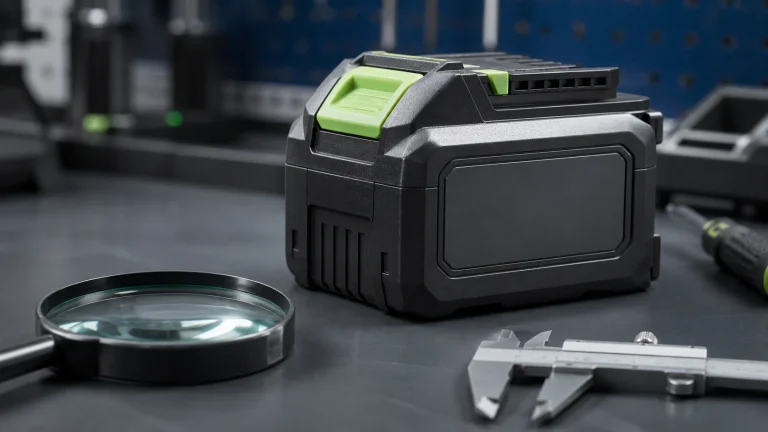
- Battery dimensions
- Terminal and contact position
A battery that cannot seat and lock correctly should not be treated as compatible. If you are evaluating an aftermarket pack, this guide to battery interfaces and contacts compatibility explains why rails, contacts, and terminal layout deserve separate attention.
Electrical Compatibility
Electrical compatibility means the battery can provide the voltage and current required by the blower through the correct terminal arrangement and protection system.
Check:
- Nominal voltage
- Terminal layout
- Discharge requirements
- Protection requirements
- Electronic communication, where used
Two batteries can display the same voltage while using different electrical interfaces.
Charger Compatibility
The charger is part of the battery system.
Confirm that the intended charger supports the exact battery platform and configuration. A replacement battery should be checked against both the leaf blower and the charger rather than against the blower alone.
This becomes especially important when buying power tool replacement batteries. The original battery model, blower model, charger, voltage, interface, and terminal arrangement should all be reviewed before compatibility is confirmed.
Choose the Right Battery Type and Replacement Option
Most modern cordless leaf blowers use lithium-ion batteries, a rechargeable battery chemistry widely used in cordless tools because of its relatively high energy density and lower weight compared with older rechargeable technologies.
Lithium-Ion vs. Older Battery Types
Older cordless equipment may use nickel-cadmium (NiCd) or nickel-metal hydride (NiMH) batteries.
| Battery type | Typical characteristics |
|---|---|
| NiCd | Older technology, heavier, memory-effect concerns |
| NiMH | Less common in modern cordless outdoor equipment |
| Li-ion | Lighter, higher energy density, widely used in modern cordless platforms |
Do not change battery chemistry simply because another type appears to have attractive specifications. Use the chemistry and battery platform designed for the blower.
Original vs. Compatible Replacement Batteries
An original battery is supplied for the equipment manufacturer’s own platform. A compatible replacement battery is an aftermarket battery designed to work with a specific tool or battery platform.
Compatible batteries can provide additional sourcing and capacity options, but compatibility should be verified rather than assumed.
Check the exact:
- Tool model
- Original battery reference
- Voltage
- Interface
- Terminals
- Charger
- Required capacity
A platform-specific product such as a Greenworks G-MAX 40V replacement battery illustrates the level of specificity buyers should look for when evaluating a replacement pack.
Quality also varies between replacement battery suppliers. Accurate model identification and clear compatibility information matter more than a generic statement such as “fits 40V tools.”
Use This Leaf Blower Battery Checklist Before You Buy
Before ordering a cordless leaf blower replacement battery, confirm these points:
- Leaf blower model — identify the exact tool.
- Original battery model — use the original reference where available.
- Nominal voltage — match the intended voltage platform.
- Battery platform — confirm the correct battery family.
- Physical interface — check rails, locking mechanism, dimensions, and terminals.
- Battery capacity — choose Ah according to expected workload.
- Watt-hours — use Wh when comparing nominal energy.
- Battery weight — consider how long the blower will be held.
- Charger compatibility — verify the charger as well as the tool.
- Cross-tool use — check whether the battery can power other equipment in the same platform.
- Replacement-battery documentation — for bulk or B2B purchasing, confirm the relevant product and destination-market documentation.
If the model, voltage, interface, or charger is uncertain, resolve those points before choosing capacity.
FAQs About Cordless Leaf Blower Batteries
Can I Use a Higher-Ah Battery in My Leaf Blower?
Yes, if the higher-Ah battery is fully compatible with the same blower platform and charger. A higher Ah rating generally provides longer potential runtime, but it also tends to add weight.
Higher Ah by itself does not establish compatibility.
Is a 4Ah or 5Ah Battery Good for a Leaf Blower?
For many residential applications, 4Ah to 5Ah offers a practical balance between runtime and battery weight. Smaller batteries may be more comfortable for quick cleanup, while 6Ah or larger packs may suit longer jobs.
The blower’s approved battery platform and workload should make the final decision.
How Long Does a Leaf Blower Battery Last Per Charge?
A smaller 2Ah-class battery may provide roughly 10–20 minutes in some cordless blowers, while 4Ah to 5Ah packs may provide around 30–60 minutes depending on the tool and operating conditions.
Maximum speed, turbo mode, wet debris, and continuous operation can reduce runtime significantly.
Can I Use a Battery From Another Brand?
Do not assume that you can. Batteries with similar voltage ratings may use different housings, terminals, locking systems, electronics, and chargers.
Check the exact battery platform rather than relying only on brand category or voltage.
Does a Higher-Voltage Battery Make a Leaf Blower More Powerful?
Use the voltage specified for the blower.
Higher-voltage cordless platforms can support higher system power demands, but battery voltage alone does not determine blower performance. CFM and MPH depend on the complete tool design, including the motor, electronics, and fan system.
Choose the Battery That Fits the Blower and the Job
The right battery for a cordless leaf blower starts with the correct platform and voltage. After compatibility is confirmed, choose enough Ah and Wh for the expected workload, then consider runtime, weight, charger compatibility, and physical fit. Bigger numbers are useful only when the battery actually belongs on the tool.
GeB Power supplies compatible replacement power tool batteries and supports OEM/ODM battery projects for global B2B buyers. If you need help with model identification, compatibility review, pack engineering, sample validation, or application-specific battery development, explore our power tool battery solutions or contact us with the original battery model, blower model, voltage, required capacity, quantity, and destination.