How to Choose a Replacement Battery for an Impact Driver
Choosing an impact driver replacement battery starts with compatibility, not capacity. The battery must match the tool’s voltage platform, physical interface, terminals, and charging system before runtime or price matters. Once compatibility is confirmed, the right amp-hour rating depends on how long you work, how demanding the fastening job is, and how much battery weight you want on the tool.
Compatibility first. Capacity second. Application decides the rest.

1. Start With Your Impact Driver and Original Battery Model
Before comparing replacement batteries, identify the exact tool and battery you already have.
A battery model number is the manufacturer’s reference used to identify a specific battery pack or battery family. It is more useful than the brand name alone because one manufacturer may have several cordless battery platforms that are not interchangeable. If the number is difficult to locate, this guide on how to identify your original power tool battery model number explains what information to look for.
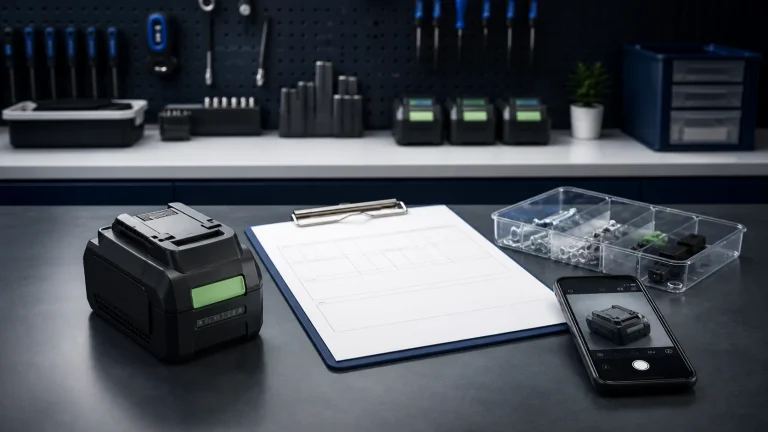
Check the labels on the impact driver, original battery, and charger. Record:
- Impact driver brand and model
- Original battery model or reference
- Nominal voltage
- Battery platform or series
- Charger model
These details create the starting point for impact driver battery compatibility.
For example, knowing that a tool is “18V” is not enough by itself. You still need to determine which 18V platform, battery interface, and charger the tool uses.
Do not start by asking whether you need a 2Ah or 5Ah battery. First identify the exact tool and battery platform.
2. Check Voltage, Battery Platform, Interface, and Charger Compatibility
A replacement battery is compatible only when the electrical and mechanical requirements of the tool are matched.
Match the Correct Voltage and Battery Platform
A battery platform is a family of cordless tools, batteries, and chargers designed to work together around a defined electrical and mechanical system.
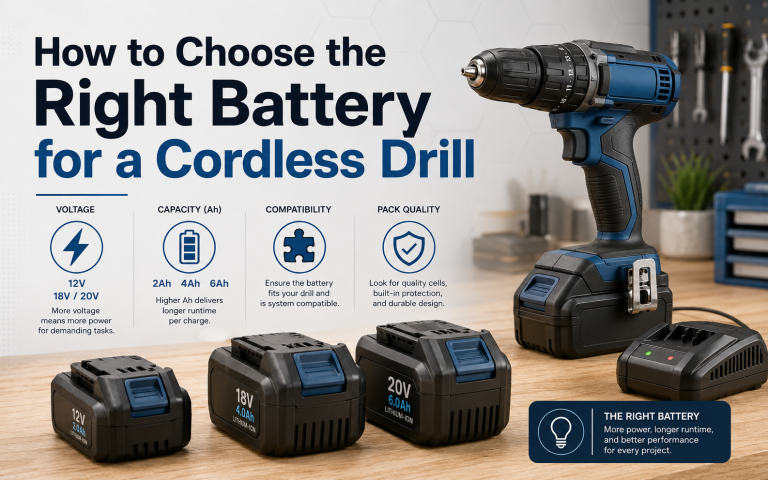
The replacement battery should be designed for the voltage platform specified for your impact driver. Common cordless impact drivers use platforms such as 12V, 18V, or 20V Max, depending on the manufacturer and product family.
Voltage labels can be misleading when viewed without platform information. Some manufacturers describe lithium-ion systems using nominal voltage, while others emphasize maximum charged voltage. This is why buyers should match battery voltage with the specific power tool platform instead of treating the voltage number as the only compatibility check.
Same voltage does not automatically mean compatible.
This also explains why the answer to “are power tool batteries interchangeable?” depends on the exact battery system rather than voltage or brand name alone.
Check the Physical Interface and Terminals
The battery must physically fit and make the correct electrical connections.
Check the:
- Slide rails or stem-style interface
- Latch and locking position
- Battery housing dimensions
- Terminal layout
- Communication contacts, where used
A battery that looks similar may still have a different latch or terminal arrangement. For a deeper explanation, see this guide to power tool battery interfaces and contacts.
This is the difference between mechanical compatibility—whether the pack fits and locks correctly—and electrical compatibility—whether the voltage, terminals, communication, and load requirements match the tool.
Confirm Charger Compatibility
Do not assume that a battery that fits the impact driver will automatically work with your existing charger.
Verify the charger model and confirm that it supports the intended replacement battery platform. Charging contacts, battery electronics, and charging requirements may differ between systems.
The safest buying decision is based on the complete combination: tool + battery + charger.
3. Choose the Right Battery Capacity (Ah)
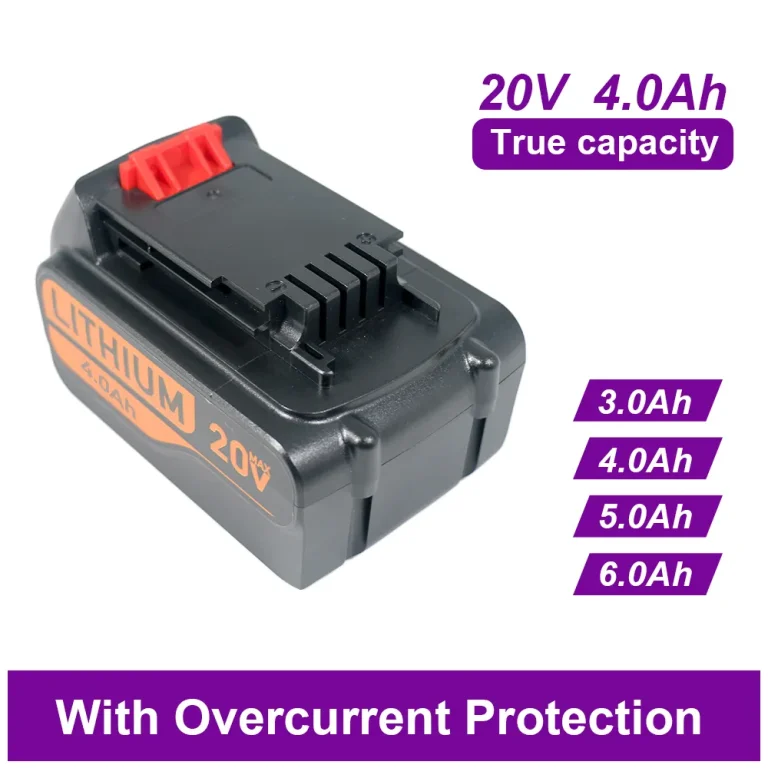
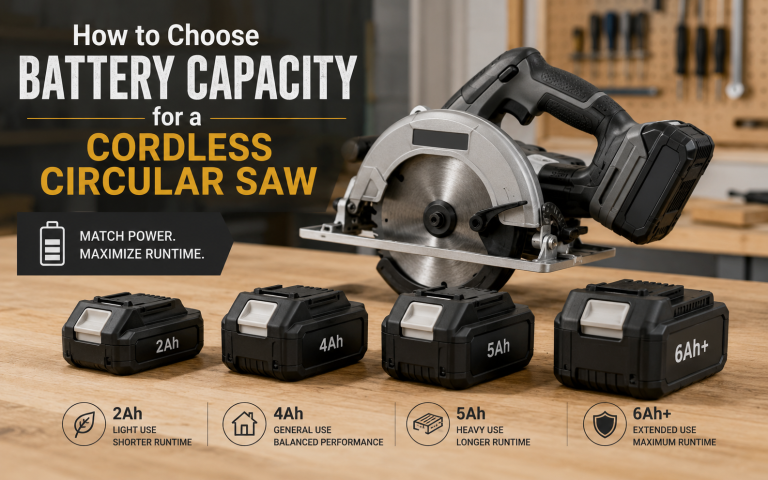
Amp-hours, or Ah, measure battery capacity. Within the same compatible battery platform and under similar conditions, a higher Ah rating generally provides more available energy and longer runtime.
It can also add size and weight. For more detail on this relationship, see how Ah affects power tool battery runtime.
| Battery capacity | Typical advantage | Suitable applications | Main trade-off |
|---|---|---|---|
| 2.0Ah–3.0Ah | Compact and lightweight | Overhead fastening, cabinets, furniture assembly, short jobs | Shorter runtime |
| 4.0Ah–5.0Ah | Balance of runtime and handling | General installation, daily DIY, regular jobsite use | More weight than compact packs |
| 6.0Ah+ | Extended runtime | Repetitive fastening, long screws, lag bolts, longer work sessions | Larger and heavier |
2.0Ah–3.0Ah: Compact and Lightweight
A compact battery works well when maneuverability matters more than maximum runtime.
It can make a noticeable difference when working above shoulder height, inside cabinets, or in other confined spaces. Less battery mass also reduces the amount of weight you repeatedly move during light fastening work.
A 12V 3.0Ah replacement battery for DeWalt DCB123 and DCB124 tools is one example of a compact-capacity replacement format. Exact tool and charger compatibility should still be checked before ordering.
4.0Ah–5.0Ah: A Balanced Everyday Choice
For many general-purpose applications, a 4.0Ah or 5.0Ah battery offers a practical compromise between runtime and tool handling.
This range is useful when you need more working time between charges but still want the impact driver to remain manageable during routine installation and fastening tasks.
For example, GeB Power offers an 18V 5Ah replacement battery compatible with Makita DTD152, illustrating how capacity and exact model compatibility can be considered together.
6.0Ah and Above: Longer Runtime for Demanding Work
Higher-capacity packs are useful when battery changes interrupt productivity.
They may suit deck work, remodeling, repeated long fasteners, or other jobs that keep the impact driver working for longer periods. The trade-off is additional bulk and weight.
The biggest battery is not automatically the best battery.
4. Match the Battery to Your Workload, Weight, and Tool Balance
Capacity should be selected around the way the impact driver is actually used.
A technician working inside cabinets may prefer a compact battery even if it needs to be recharged more often. A contractor repeatedly driving long screws may accept a heavier pack to reduce interruptions.
Weight is only part of the handling equation. The size and position of the battery also affect the tool’s balance, meaning how the combined weight of the driver and battery feels in the hand.
That matters during repetitive or overhead work.
Battery performance under demanding loads can also differ even when two packs have the same nominal voltage. Ah mainly describes capacity; it does not fully describe how a pack behaves under high current demand. Cell configuration, pack design, internal resistance, electronics, and discharge capability can also affect performance.
Choose the battery around the workload, not around the largest capacity number on the product page.
5. OEM vs. Aftermarket Impact Driver Batteries
Replacement battery buyers usually have two options: an OEM battery or a compatible aftermarket battery.
OEM Batteries
An OEM battery is supplied within the original tool manufacturer’s battery ecosystem. Its intended tool and charger relationships are usually easier to identify because they are part of the same platform.
OEM batteries may also come with warranty and support terms directly tied to that manufacturer’s product system.
For a broader comparison of these two purchasing paths, see replacement battery vs. original battery.
Compatible Aftermarket Batteries
An aftermarket battery is independently produced rather than manufactured by the original tool brand. A compatible aftermarket battery is designed to work with specified third-party tools or battery platforms.
Compatibility still needs to be checked carefully.
Before buying, confirm:
- Exact tool or original battery model
- Voltage and platform
- Interface and terminals
- Charger compatibility
- Stated Ah capacity
- Protection features
- Supplier and warranty information
GeB Power organizes its power tool replacement batteries around compatible cordless tool platforms, allowing buyers to narrow their search by the intended battery system.
Do not judge an aftermarket battery by price alone. The important question is whether the pack has been designed and specified for the exact platform you intend to use.
6. Check Battery Pack Quality and Protection Features
The quality of a power tool battery depends on more than the brand printed on its cells.
A complete battery pack includes cells, electrical connections, mechanical structure, protection circuitry, and thermal design. Assembly quality also matters, especially in a tool that can place high current demands on the battery during difficult fastening work.
Look for clearly specified protection features such as:
- Overcurrent protection
- Overcharge protection
- Over-discharge protection
- Short-circuit protection
- Temperature protection, where applicable
Cell quality matters, but cell branding alone does not determine the quality of the complete battery pack.
For an impact driver, the replacement battery should be evaluated as an engineered pack rather than as a collection of individual cells. A broader replacement power tool battery buyer’s guide can help when comparing these factors across different cordless tool types.
7. Use This Checklist Before Buying an Impact Driver Replacement Battery
Run through these checks before placing an order:
- Confirm the impact driver model.
- Identify the original battery model.
- Match the correct voltage platform.
- Check the battery interface and latch.
- Verify the terminal layout.
- Confirm charger compatibility.
- Choose Ah according to runtime and weight needs.
- Consider the workload and discharge demands.
- Review available battery protection features.
- Check supplier and warranty information.
If the exact battery platform cannot be confirmed from the product information, verify compatibility before ordering rather than relying on voltage or brand name alone.
8. FAQs About Impact Driver Replacement Batteries
Can I use a higher-Ah battery in my impact driver?
If the higher-Ah battery belongs to the correct platform and matches the tool, interface, terminals, and charger requirements, the higher capacity can provide longer runtime.
The main trade-off is usually additional size and weight.
Does a higher-Ah battery make an impact driver more powerful?
Not necessarily.
Ah is primarily a measure of capacity. Tool performance under heavy load also depends on the cells, battery pack configuration, discharge capability, electronics, and the impact driver itself.
Are 18V and 20V Max batteries the same?
Some lithium-ion platforms use nominal-voltage and maximum-voltage labeling differently. That does not make every 18V and 20V Max battery interchangeable.
Always verify the specific battery platform and model rather than relying on the voltage label alone.
Can I use an aftermarket battery in my impact driver?
A compatible aftermarket battery can be used when it is specifically designed for the relevant tool platform. Confirm the tool model, battery reference, voltage, interface, charger compatibility, and protection requirements before purchase.
Choosing the Right Replacement Battery for Your Impact Driver
The right replacement battery is the one that first matches your impact driver electrically and mechanically, then provides the capacity and handling characteristics your work requires. Verify the model, voltage platform, interface, terminals, and charger before deciding whether a compact 2–3Ah pack, a balanced 4–5Ah option, or a larger-capacity battery is the better fit.
GeB Power supplies compatible replacement power tool batteries for global B2B buyers and supports model identification, compatibility review, battery pack engineering, sample validation, and production planning. For projects that require more than a standard catalog battery, GeB Power also provides replacement battery supply and OEM/ODM project support.
If you need help identifying a compatible battery for a specific impact driver, original battery, or charger, contact GeB Power with the relevant model information for review.